
Permanent Residence Application in Canada with a Lawyer
You are a Canadian citizen or a permanent resident, and someone you love lives somewhere else? Family sponsorship in Canada exists for exactly that. Family reunification allows an eligible sponsor to sponsor a family member — a spouse, common-law partner, dependent child, sometimes a parent or grandparent — for permanent residence.
The mechanics of family sponsorship, on the other hand, are discouraging. A sponsorship application in Canada is filed with Immigration, Refugees and Citizenship Canada. A Quebec resident must, in addition, have a sponsorship undertaking approved by the Ministère de l’Immigration, de la Francisation et de l’Intégration, Quebec’s immigration ministry.
Two governments, two sets of required forms. One error of category, and the file comes back without ever being examined on its merits.
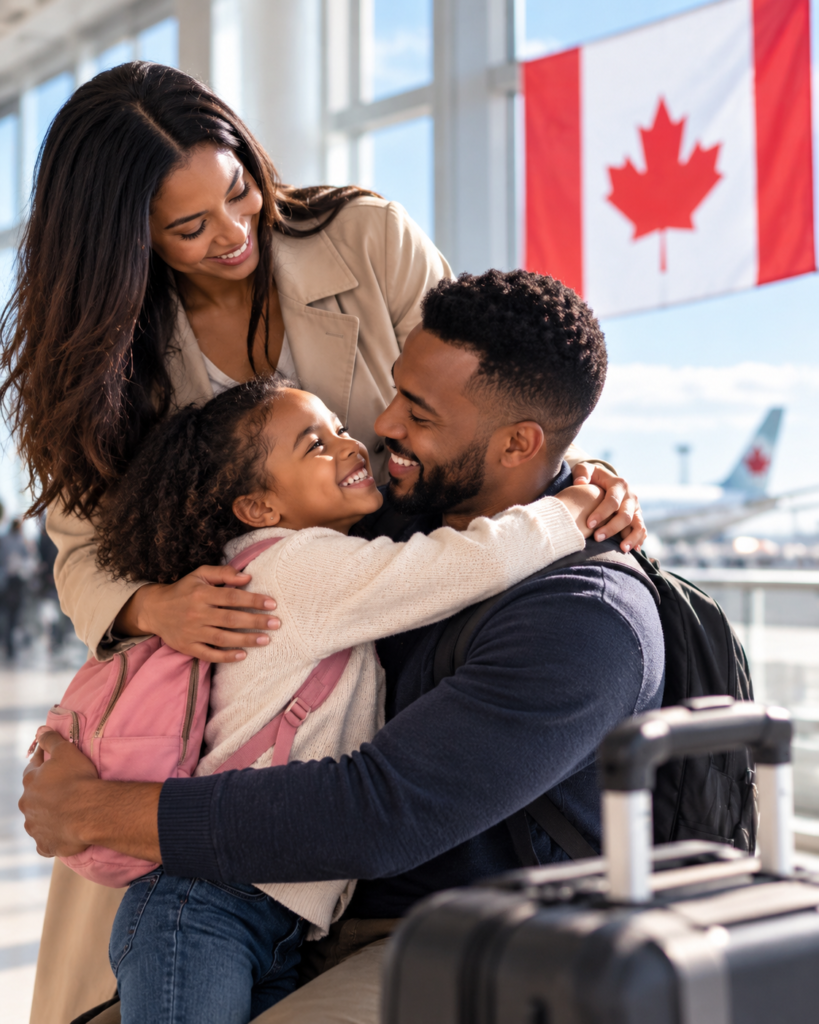
The family class, two levels of government rather than one
The family class in Canada is one of the major categories of permanent immigration. The Immigration and Refugee Protection Act and its regulations set the principle: Canadian sponsorship rests on the family or spousal relationship between the principal applicant and the sponsor, not on an economic score. Your spouse does not have to demonstrate Canadian work experience.
Two categories coexist at the federal level. The family class covers close relatives living abroad. The spouse or common-law partner in Canada class applies to those who already live here with their sponsor, even without valid status, under an IRCC public policy. Our immigration lawyers in Montreal settle the category first: that choice governs the permanent residence application, the processing times and the recourse available to you.
Who can act as a sponsor, and who cannot
The sponsor carries the file. IRCC verifies the sponsor’s eligibility before it looks at the sponsored person. The basic eligibility requirements fit in five lines:
- Be a Canadian citizen, a permanent resident, or a person registered as an Indian under the Indian Act.
- Be at least 18 years of age.
- Reside in Canada, unless you are a citizen and can demonstrate your intention to return and live here once the sponsored person obtains permanent residence.
- Sign a sponsorship undertaking and be able to provide for the basic needs of the sponsored dependant.
- Fall under no ground of inadmissibility.
That last line accounts for most avoidable refusals. A sponsor becomes ineligible if they are subject to a removal order or a deportation order, if they are detained, if they have been convicted of serious offences, if they have defaulted on a previous sponsorship undertaking, on a support obligation or on alimony payments, if they are an undischarged bankrupt, or if they receive social assistance for a reason other than a disability.
A five-year bar applies as well. A person sponsored as a spouse or common-law partner cannot sponsor a spouse of their own before that period has run.
Family sponsorship in Quebec: the MIFI undertaking and the CSQ on top of the federal file
Family sponsorship in Quebec adds a step the rest of Canada does not have. After the federal filing, IRCC issues the sponsor an eligibility letter. That letter opens the undertaking application to the MIFI, filed together with an Application for Permanent Selection, at the end of which the Certificat de sélection du Québec — the Québec Selection Certificate — is issued to the sponsored person. Without a CSQ, there is no permanent residence in Quebec.
The MIFI caps this intake. It reopened the window on July 2, 2026 for a maximum of 15,700 undertaking applications through June 30, 2028: 13,300 for spouses and partners, 2,400 for parents and grandparents. Sponsoring a dependent child, an orphaned minor child or a child to be adopted falls outside the cap.
An intake schedule ranks files according to the date on your IRCC eligibility letter. Applications are mailed in, with the required processing fees.
Your place in the queue depends on a date you already hold. We verify it, then prepare the file ahead of your filing window. The same two-tier structure governs other provincial procedures at the MIFI, such as the Québec Acceptance Certificate. Family sponsorship in Quebec can be handled from anywhere. Our clients in the Capitale-Nationale region go through our immigration lawyer in Quebec City page.
Book a family sponsorship consultation
Forty-five minutes to know exactly where you stand. We verify your eligibility date, your sponsorship category and your filing schedule, with no free assessment and no empty promises.
A single date on an IRCC letter can push your filing back by months. Check it before you fill out anything.
Sponsoring your spouse, your common-law partner or a dependent child
Spousal sponsorship is the most common route among the sponsorship programs. A spouse is married to you, through a marriage valid both where it was celebrated and under Canadian law. A common-law partner has lived with you in a conjugal relationship for twelve months. A conjugal partner lives abroad and can neither marry you nor cohabit with you.
Child sponsorship covers a dependent child under 22 who has no spouse or common-law partner. Beyond that age, a child remains a dependant if they have relied on you since that age because of a physical or mental condition. No income requirement weighs on the sponsor in these cases.
Inland or outland: what changes for you
Where your spouse lives determines the sponsorship category, and the category determines your rights during the wait. Inland spousal sponsorship gives access to an open work permit: your spouse can work for any employer while the permanent residence application is processed, once the open work permit is obtained. Our guide to work permits in Canada sets out how that works.
Outland spousal sponsorship leaves the spouse abroad, with no right to work here, but preserves a full right of appeal: the sponsorship appeal stays open if the application is refused. The choice is strategic, not merely practical.
Proving a genuine relationship and defeating the suspicion of a marriage of convenience
The visa officer is looking for one thing: was the relationship formed for its own sake, or for permanent resident status. A genuine relationship is documented, not declared.
The evidence that carries the most weight:
- A marriage certificate or record of marriage, with photographs of the ceremony.
- Proof of cohabitation: a joint lease, joint accounts, tax returns.
- A statutory declaration from people close to you who know the couple (letters).
- Continuous, dated correspondence, and a coherent account of visits.
An allegation of marriage of convenience cannot be answered after the fact with the same odds. Some files lead to a sponsorship interview, on top of the required biometrics. We build the evidence before filing.
Biological children, adopted children and orphaned siblings
Child sponsorship covers your biological and adopted children. International adoption layers its own rules on top of immigration law, and Quebec adds a process of its own. Dependent children added to an existing sponsorship undertaking fall outside the Quebec caps.
A brother, sister, nephew, niece or orphaned grandchild can be sponsored if they are under 18, unmarried and both parents are deceased. To sponsor a family member outside those cases, the door only opens if you have no eligible close relative at all; humanitarian and compassionate grounds then take over. At the end of the process, the sponsored person obtains landed immigrant status.
Parent and grandparent sponsorship in Canada
Parent sponsorship in Canada follows a different logic than spousal sponsorship. Sponsoring a parent, like the Grandparents Program as a whole, works by invitation only: IRCC opens an intake period, draws at random from the pool of interested sponsors, then invites a fixed number of people to file a complete application. No one files spontaneously.
The program is paused. The last intake period dates back to 2025, drawn from the 2020 pool, and IRCC has announced neither a new period nor new criteria. Parent sponsorship applications already filed continue to be processed.
The interest to sponsor form, then the invitation to apply
When the program reopens, the interest to sponsor form is completed online over a few days. IRCC draws at random, then sends the invitation to apply by email, to the address provided. An out-of-date address costs you your turn.
Submitting the interest to sponsor form guarantees nothing. The only useful preparation: gather your proof of income and civil status documents in advance, so you can file a complete permanent residence application through the Permanent Residence Portal within the tight deadline that follows the invitation.
Minimum necessary income, co-signer and the super visa as a fallback
Here, income counts. The sponsor must meet the minimum necessary income for the size of the family, increased by 30 per cent, over the three preceding tax years. That income threshold is based on the low income cut-off, according to the size of the family unit: you, your spouse, your dependent children and the sponsored persons. The income requirements are not negotiable.
A co-signer can be added, but only your spouse or common-law partner: their means are added to yours, their financial capacity is assessed alongside yours, and joint liability commits them to the same financial support. The undertaking runs twenty years for a parent or grandparent, three years for a spouse.
When parent sponsorship is closed, as it is actually, other options exist depending on your projects and objectives:
- The super visa for parents and grandparents, multiple-entry, valid for ten years.
- A visitor visa, for short stays.
- An application based on humanitarian and compassionate grounds.
- A parallel economic route, through Express Entry or through Arrima in Quebec.
Discuss your parent sponsorship application with a lawyer
Full consultation at $250 plus taxes, with a satisfaction guarantee. Our immigration legal fees are published, with no surprises on the invoice.
Sponsorship refusal: your recourse before the Immigration Appeal Division
A refusal is not the end. It is the start of another procedure, on short deadlines. A sponsorship refusal in the family class opens a right of appeal to the Immigration Appeal Division of the Immigration and Refugee Board of Canada.
An appeal is not a second reading. The Immigration Appeal Division hears the evidence anew, receives documents the officer never had, and substitutes its own decision for the one made by IRCC. A file refused for insufficient proof of a genuine relationship is often won at this stage.
Appealing the refusal, then judicial review before the Federal Court of Canada
When the sponsorship appeal fails, or when a finding of inadmissibility closes off that right of appeal, the next route is judicial review before the Federal Court of Canada. It does not retry the facts: it reviews the legality and the reasonableness of the decision.
- Application for leave, within the prescribed deadline following the sponsorship refusal.
- Decision by a judge on the written record, then the hearing of the judicial review.
- Referral back to a different decision-maker if the Federal Court of Canada rules in your favour.
Appeal deadlines are counted in days, not weeks. A refused file needs to be looked at immediately.
Family sponsorship lawyer or immigration consultant in Canada: who can actually represent you
The distinction is simple and decisive. A regulated immigration consultant can prepare and file a sponsorship application. They cannot represent you before the Immigration Appeal Division or before the Federal Court of Canada. Only a family sponsorship lawyer who is a member of a bar can do that.
If your sponsorship application succeeds, the difference is invisible. If it is refused, that difference determines what you have left. Hence our rule: a complex family class file goes to a lawyer from the outset.
Have your file assessed by a lawyer of the Barreau du Québec
A sponsorship refusal needs to be looked at right away. We assess your recourse and the deadline still running.
FAQ
Frequently asked questions about family sponsorship
How long does a sponsorship application take?
Delays vary widely, and are put up to date regularly by the IRCC. Files destined for Quebec have recently exceeded forty months, because the provincial step is added to federal processing. Processing times for other family members often run past three years. These figures move: check the IRCC and MIFI tools at the time of filing.
Is a minimum income required to sponsor a common-law partner?
No, as a general rule. Sponsoring a spouse, a common-law partner or a conjugal partner with no dependent children carries no income threshold. The sponsor still signs the sponsorship undertaking and demonstrates that they are not ineligible. The income requirements apply to parent and grandparent sponsorship applications.
Where does family reunification in Quebec stand for spouses?
The MIFI reopened intake for undertaking applications on July 2, 2026, after the suspension of July 2025. The family reunification cap in Quebec is set at 13,300 applications involving a spouse or common-law partner, through June 30, 2028. An intake schedule staggers filings according to the date on your IRCC eligibility letter.
What happens if the sponsorship undertaking is breached?
A breach occurs when a government pays the sponsored person social assistance that you had undertaken to cover. The debt becomes payable, the co-signer is jointly liable for it, and you cannot sponsor anyone else as long as it remains outstanding. The undertaking survives divorce, and it does not depend on the rights the sponsored person acquires as a permanent resident.
Entrusting your sponsorship file to Patrice Brunet Avocats
A boutique firm in Outremont founded in 1993, we practise Canadian and Quebec immigration law. More than 850 clients and 3,000 files, including a great many sponsorship applications.
What counts for a family reunification file: we are lawyers and members of the Barreau du Québec, qualified to stay with you from filing all the way to the Federal Court of Canada. And we know the Quebec two-tier system, the one that trips up files prepared elsewhere.
More than thirty years of immigration practice, in six languages
Our team counts seven lawyers and works in six languages. For a sponsor, describing a genuine relationship in their own language changes the quality of the evidence.
Consultations are held by videoconference: the family sponsorship program can be handled from anywhere in Quebec and Canada. Our clients in the Estrie region go through our immigration lawyer in Sherbrooke page. We also follow files after permanent residence, through to the renewal of the permanent resident card.
Book your $250 full consultation
Forty-five minutes with a lawyer, refunded if the answers do not satisfy you.
You leave with a sponsorship strategy.
Book my consultation