
Permanent Residence Application in Canada with a Lawyer
A permanent residence application commits you to settling here. When the application targets Quebec it passes through two governments, it calls for precise documents, and a single error is enough to trigger a refusal.
Patrice Brunet Avocats has practised immigration law since 1993. The firm has handled more than 3,000 files in six languages. Our immigration lawyers prepare your permanent residence application from the choice of program through to your Confirmation of Permanent Residence.
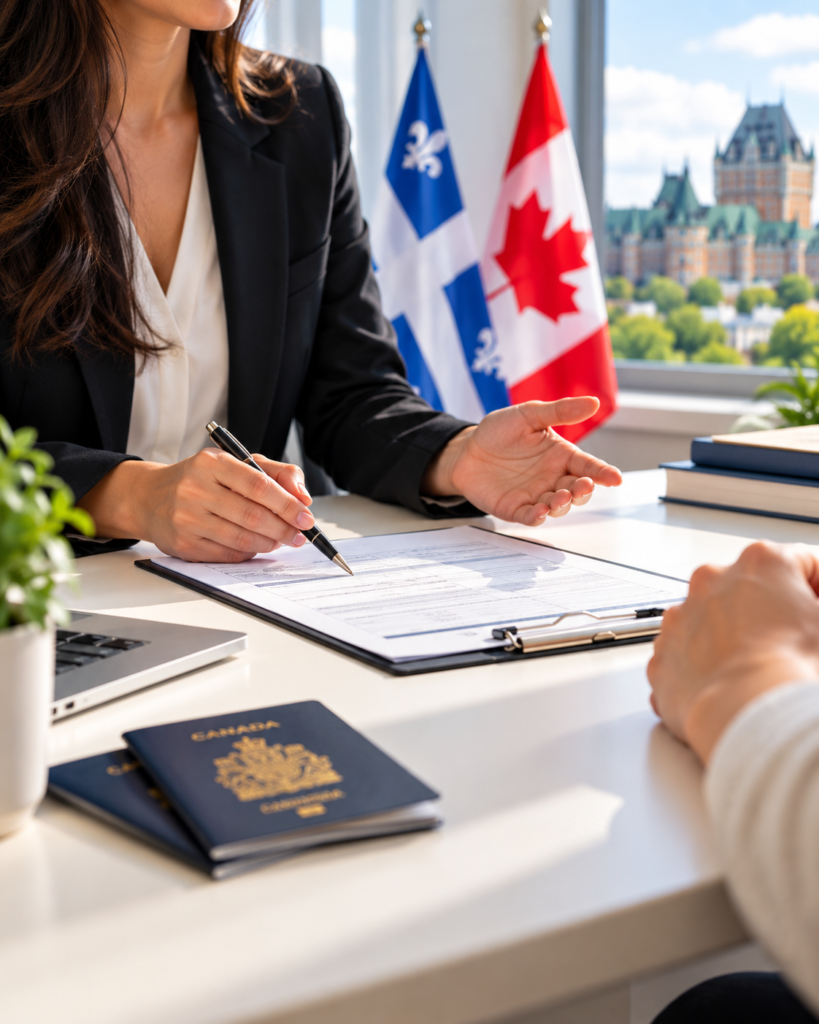
The Pathways to Permanent Residence in Quebec and Canada
No single door leads to permanent residence in Canada. The federal government manages economic immigration through Express Entry, the Provincial Nominee Program selects candidates for the regions, and Quebec applies its own selection grid before any federal processing begins.
The right program depends on your profile: age, education, training, work experience, French language proficiency, validated job offer, current status in Canada. A consultation with an immigration lawyer in Montreal first rules out the pathways that will lead you nowhere, then sets a strategy.
Quebec’s Two-Step Process: the Quebec Selection Certificate (CSQ)
Quebec selects its immigrants before Canada does. The Ministère de l’Immigration, de la Francisation et de l’Intégration issues the Quebec Selection Certificate, and without that CSQ, Immigration, Refugees and Citizenship Canada will not examine a permanent residence application. The provincial filing goes through Mon Projet Québec.
This two-step process doubles the fees, the processing times and the document lists. It also creates a second opportunity for refusal: the federal government re-verifies admissibility, medical condition and criminal record after provincial selection, under the Immigration and Refugee Protection Act.
An international student meets the same mechanism earlier. Our CAQ application service covers the Quebec Acceptance Certificate, the temporary counterpart of the CSQ.
Express Entry and the Federal Skilled Worker Programs
Express Entry manages permanent residence applications filed outside Quebec. The system ranks every candidate in a pool according to the Comprehensive Ranking System, then IRCC invites the strongest profiles during its rounds of invitations.
Three federal programs run through that pool:
- The Federal Skilled Worker Program, for a skilled worker with work experience acquired abroad
- The Federal Skilled Trades Program, which requires two years in a trade listed in the National Occupational Classification
- The Canadian Experience Class, for those who have already worked in Canada
A Provincial Nominee Program nomination adds 600 points and makes an invitation close to certain. The Global Talent Stream serves as a temporary entry point toward permanent immigration. Business people — investors, entrepreneurs and self-employed workers — fall under separate programs that our immigration lawyers assess case by case.
PSTQ, the Arrima Portal and the Global Talent Stream
The PSTQ, or Quebec Skilled Worker Selection Program, replaced both the PRTQ, the Regular Skilled Worker Program, and the PEQ, the Quebec Experience Program. It works through an expression of interest on the Arrima portal, followed by an invitation from the ministry.
The mechanism deserves separate treatment: our complete PSTQ guide sets out the streams, the selection criteria and how points are calculated. The question here is simpler: is this program the right one for you, or will another pathway carry you faster to permanent resident status?
For a French speaker already living in Quebec, the PSTQ is often the obvious route. For an English speaker with no ties to the province, Express Entry outside Quebec almost always is.
Book a Consultation with a Permanent Residency Lawyer
A full 45-minute consultation, $250 plus taxes, with our satisfaction guarantee. You leave with a written action plan and the name of the immigration program that matches your situation.
How a Permanent Residence Application Is Prepared
A permanent residence application is a file of evidence. Every statement has to be documented: identity, education, paid employment held, employer, marital status, financial self-sufficiency.
IRCC refuses an application for incompleteness before it ever assesses the merits. One missing document, one uncertified translation, one date that does not line up, and the file comes back. Our lawyers build the application in the order the officer will read it, then follow the process through to the decision.
Documents, Medical Exam and Biometrics
The medical exam is done by a panel physician designated by IRCC, never by your family doctor, and the results are valid for twelve months. Biometrics — fingerprints and photo — are given at a visa application centre.
These two steps produce the most frequent errors we see. An applicant whose medical condition raises inadmissibility for excessive demand on health services needs a lawyer before the exam, not after.
Language Tests and Comparative Evaluation of Studies
Your language skills are proven by a recognized test, never by a declaration. Your language proficiency drives your score in nearly every program. TEF Canada and TCF Canada measure French, IELTS and CELPIP measure English, and each program sets its own language threshold.
Schooling obtained outside Canada requires an evaluation. The Comparative Evaluation for Studies Done Outside Québec serves the Quebec stream; the Educational Credential Assessment serves Express Entry. These are two distinct documents.
- Vocational studies diploma, college studies diploma, bachelor’s, master’s, doctorate: each level of education unlocks different points
- Take the language test early — results are valid for two years
- Keep your transcripts, not just the diploma itself
Processing Fees, Timelines and Tracking Your File
Processing fees are paid in two stages when Quebec is the destination: provincially for the CSQ, federally for the permanent residence application, plus the Right of Permanent Residence Fee. Budget, as of today, more than $2,000 for a single applicant.
Processing times vary by program, by labour market conditions and by the workforce needs being targeted. We promise no timeline: IRCC publishes them and revises them.
An invitation opens a 60-day window. Our article on the next steps after an invitation describes what a candidate needs in hand before the clock starts running.
Sponsorship, Family Reunification and Humanitarian Grounds
Not every permanent residence application belongs to economic immigration. Family reunification allows a Canadian citizen or a permanent resident to sponsor a close relative. Humanitarian and compassionate grounds open a discretionary pathway when no regular program applies.
These files rest on proof of a relationship, not on points. Permanent residence applicants win or lose them on the quality of their supporting evidence.
Spousal Sponsorship and Sponsoring Family Members
Spousal sponsorship requires you to demonstrate a genuine relationship, the most common ground of refusal in this category. Photographs, communications, joint accounts: the officer is looking for a coherent trajectory.
The sponsor makes a financial undertaking of three years for a spouse, twenty years for a dependent child. That undertaking survives a separation. We explain its full scope before filing.
Asylum Claimants, Humanitarian Grounds and Protected Persons
An asylum claimant obtains permanent residence once protected person status is recognized, through a pathway distinct from economic immigration. Two lawyers at the firm make this a dedicated practice.
Humanitarian and compassionate grounds serve the situations the legislation did not anticipate: the best interests of a child, prolonged establishment, the consequences of a removal. Legal argument weighs more here than the form itself.
Have Your Permanent Residence File Reviewed
A complete review of your documents in one hour, $360 plus taxes. You have assembled your file yourself and you want a lawyer’s reading of it before you file.
What Follows Your Application: Status, Card and Remedies
Obtaining permanent residence is not the end of the journey. The status carries obligations, it is proven by a card, and it can be lost in certain circumstances. Canadian citizenship comes later, with its citizenship certificate.
Confirmation of Permanent Residence and Permanent Resident Status
The Confirmation of Permanent Residence comes first. It marks the passage from foreign national to permanent resident, also known as a landed immigrant. One must however wait for a permanent residence card.
The permanent resident card follows by mail. It proves the status, it does not create it. Our guide to renewing a permanent resident card covers expiry and the permanent resident travel document.
The residency obligation requires 730 days of presence in every five-year period. A permanent resident living outside the country risks losing that status.
Refusals, the Immigration Appeal Division and the Federal Court
A refusal can be challenged. Depending on the decision, the remedy runs through the Immigration Appeal Division or through a judicial review before the Federal Court, within short deadlines.
This is where the distinction matters. Immigration consultants do not plead before these bodies. Only lawyers who are members of the Barreau du Québec hold the right of representation there: a file refused in a consultant’s hands has to change hands to be contested.
FAQ
Frequently Asked Questions About Permanent Immigration
Do you need a CSQ to settle permanently in the province?
Yes, for virtually every economic pathway targeting Quebec. Other provinces select differently, but Quebec requires its own selection before federal processing. Family sponsorship and protected persons follow separate rules.
Can you become a permanent resident without a job offer?
Yes. A validated job offer adds points without being mandatory in the major immigration programs. Many candidates obtain permanent residence on the strength of their profile alone. A temporary worker often goes through a permit first: our guide on how to apply for a work permit in Canada covers that step.
What is the difference between a lawyer and an immigration consultant?
A lawyer is a member of the Barreau, bound by a code of ethics and insured. A lawyer represents clients before the Federal Court and the Immigration Appeal Division. A regulated consultant prepares and files an application, without pleading before those tribunals.
Can permanent residents lose their status?
Yes, through a breach of the residency obligation or through inadmissibility for criminality. The status does not expire with the card, but it can be revoked. Our article on permanent resident rights sets out what the status allows.
A Montreal Immigration Law Firm Since 1993
Patrice Brunet Avocats is located at 1108 Laurier Avenue West, in Outremont. The firm assists individuals, families, temporary foreign workers and businesses who want to immigrate to Canada, across Quebec and internationally, by videoconference.
Our clients in the Quebec City region go through our immigration lawyer in Quebec City page, and those in the Eastern Townships through our immigration lawyer in Sherbrooke page.
Our Lawyers, Five Working Languages and Published Fees
Seven lawyers make up the team. We work in French, English, Spanish, Mandarin and Russian. A nuance poorly translated in an explanatory letter changes the meaning of a file.
Our rates are published: full consultation $250 plus taxes, document review $360 plus taxes, mandates billed hourly. The first meeting is free of charge for businesses. Our article details the price and fees of an immigration lawyer. Whether you want to immigrate through a Working Holiday permit, an International Co-op internship or the Young Professionals stream, and then settle in Canada for the long term, the process starts with the same diagnosis.
Book Your Full Consultation
One meeting is enough to know where you stand.
You leave with the program you are aiming for, the list of your documents and the order of the steps.
Book an appointment